Blocked Outside Drain? How to Unblock It Yourself — and When to Stop (UK Guide)
An overflowing gully after heavy rain, grey water pooling around the drain cover, that unmistakable smell — a blocked outside drain announces itself clearly. The good news: a decent share of these blockages are within reach of a determined householder with the right kit. The equally useful news: some very much aren't, and knowing the difference saves you a wet afternoon and a bigger bill.
In short: Lift the cover, scoop out what you can reach, then work a set of drain rods through the blockage — always twisting clockwise, never anti-clockwise. If two attempts don't shift it, or the blockage keeps returning, stop and call a professional.
First, work out whose drain it is
Before you spend anything: if the blocked drain serves more than one property, or sits beyond your boundary, it's usually the water company's problem to fix — free of charge. It's one of the most misunderstood rules in UK drainage, and we've unpicked it here: whose drain is it? Only read on if the drain is genuinely yours.
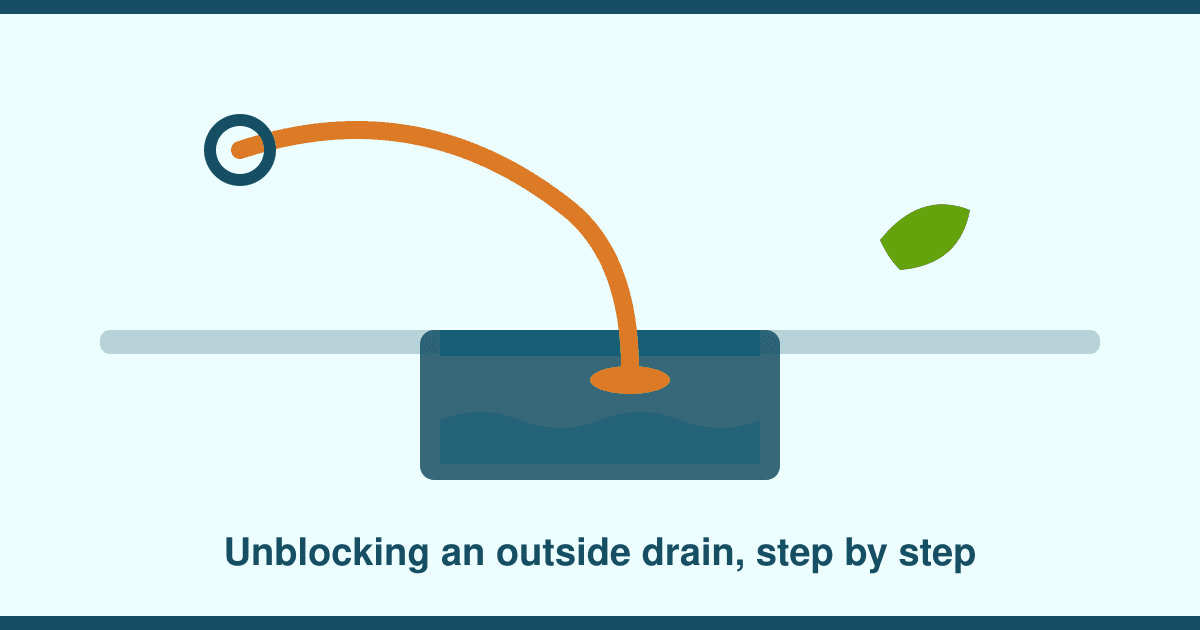
The step-by-step method
- Kit up: Long waterproof gloves, old clothes, eye protection, a bucket — and a set of drain rods with a plunger and worm-screw head. A 12-piece set costs around £30 at any DIY shed and lasts for years.
- Open the chamber: Lift the inspection cover nearest the problem (a flat screwdriver or the rod hook helps). If the chamber is full, the blockage is downstream of it; if it's empty, work back upstream to the previous chamber.
- Clear what you can reach: Scoop out leaves, silt and debris by hand or with a small trowel. A surprising number of "blockages" are just a matted lid of leaves over the outlet.
- Rod the pipe: Screw two or three rods together, feed them into the outlet towards the blockage, and push with steady pressure — twisting clockwise only. Anti-clockwise twisting unscrews the joints, and a rod left inside the pipe turns a £30 job into an expensive excavation.
- Break it up: When you feel the obstruction, alternate pushing and pulling to punch through it, adding rods as you go. Fat and wet-wipe plugs need persistence rather than force.
- Flush through: Once water starts moving, run a hose (or empty buckets of hot water) through the chamber for several minutes to carry the loosened material away, then check the flow from an upstream gully.
The caustic soda question
Sodium hydroxide crystals are the internet's favourite drain fix — and professionals treat them with respect for a reason. Caustic soda is highly corrosive: splashes cause serious eye and skin injuries, and the reaction with water generates heat. If you do use it, mix it into cold water (never the other way round), wear gloves and eye protection, pour it into the drain, leave it around 30 minutes, then flush thoroughly with hot water. Never use it in a drain that's completely backed up — you'll just create a pool of corrosive liquid waiting for your rods, and for whoever works on the drain after you.
When DIY is the wrong answer
- Rodding fails twice. More force is not the fix — professionals bring high-pressure jetting that clears what rods can't.
- The blockage keeps coming back. Recurring blockages at the same spot point to a collapsed section, scale build-up or root ingress — only a CCTV survey will show which.
- Sewage is backing up indoors. Stop and call someone today — that's a main-line problem, not a gully problem.
- The chamber is deep or brimming. Confined spaces and standing sewage are genuinely hazardous; this is exactly what professionals are equipped for. What a call-out costs is covered in our drain unblocking price guide — and in some cases your home insurance may pick up the bill.
Prevent the repeat performance: Most outside blockages start with leaves and cooking fat. A leaf-interceptor gully trap for a standard 110mm downpipe costs under £50, takes minutes to fit, and catches debris before it reaches the pipe — cheaper than a single call-out.
The bottom line
Rods, gloves and patience clear most straightforward outside blockages for the price of a takeaway. But a drain that refuses to stay clear is telling you something rods can't fix — at that point, a professional with a camera and a jetter is the economical choice, not the extravagant one. Find vetted drainage specialists in your area here.
Frequently asked questions
Lift the nearest inspection cover, scoop out reachable debris, then feed drain rods into the pipe towards the blockage — pushing steadily and twisting clockwise only. Once water moves, flush the drain through with a hose for several minutes. A 12-piece rod set costs around £30.
The rods screw together — twisting anti-clockwise unscrews the joints, and a detached rod or plunger head left deep in the pipe usually means an expensive professional retrieval. Keep every twist clockwise and the set stays in one piece.
It works on fat and organic matter but is highly corrosive — it can cause serious eye and skin injuries and heats up when mixed with water. Always add the crystals to cold water, wear gloves and eye protection, leave it around 30 minutes and flush well. Never pour it into a fully backed-up drain.
If two rodding attempts fail, if the blockage keeps returning to the same spot, if sewage is backing up indoors, or if the chamber is deep and brimming. Recurring blockages usually mean a collapsed pipe, scale or tree roots — which only a CCTV survey can confirm.